A Practitioner’s Guide to Faculty Affairs

A Practitioner’s Guide to Faculty Affairs

By Reema Zeineldin
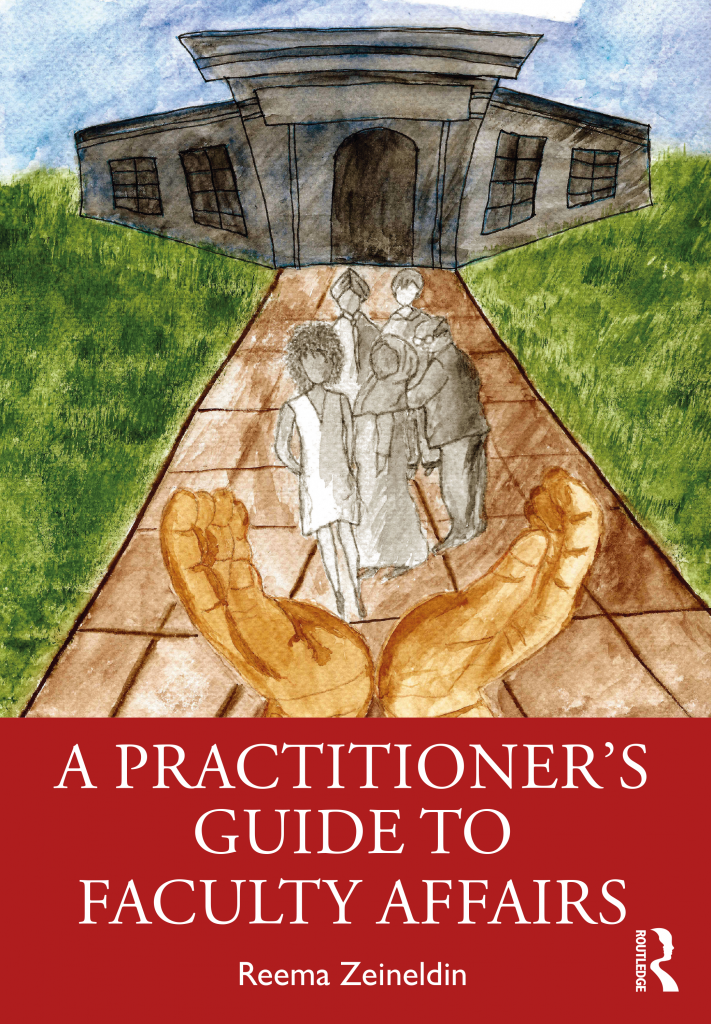
Order your copy here

This book aims to define and establish faculty affairs as a discipline within higher education, offering practical recommendations and guidance on how to effectively support academic personnel.

Leading with a comprehensive exploration of faculty affairs and its scope, this book responds to existing needs in the field by covering how to appraise the status of faculty affairs within an institution, determine the risks and rewards of creating a faculty affairs unit, chart the planning measures necessary for execution, and more. Worksheets, practical tips, and chapter objectives give readers the opportunity to account for their own unique context and tailor approaches for maximum impact. Carefully selected case studies showcase excellent faculty affairs work across institution types for a wide range of guiding models.

Who is this book for?

  • Administrators, leaders and staff who manage and govern faculty affairs
  • Faculty members
  • Faculty senates, unions, and representing entities
  • Professionals who care about faculty affairs
Chapter 1: Scope and status of faculty affairs
 
Case study 1.1: The creation and development of Faculty Affairs Network, Northeast (FANN): A new way of supporting faculty affairs professionals
Jessica Pesce
 
Chapter 2: Definitions – faculty and higher education institutions
 
Chapter 3: Faculty staffing planning
 
Chapter 4: Beyond “post and prey”: faculty recruitment
Margaret A Carroll and Susan P Dargan
 
Case study 4.1: An alliance of three regional universities for recruiting, retaining, and supporting success of faculty of color
Martina Arndt, Elizabeth Foss, Linda S Larrivee, and Reema Zeineldin
 
Chapter 5: Faculty hiring and onboarding
 
Case study 5.1: New faculty orientation: an opportunity to “Jump Start” tenure and promotion success
Magdalena L. Barrera
 
Case study 5.2: New faculty academy: A tool for faculty success at Ball State University  
Kristen L McCauliff and Thalia M Mulvihill
 
Chapter 6: Faculty mentorship, development, and connections
 
Case study 6.1: Starting a center for teaching and learning in a teaching-intensive institution
Traci Freeman
 
Case study 6.2: The Johns Hopkins University Provost’s Leadership, Advancement, and Development (LAD) academy to support faculty development
Antoinette S Ungaretti, Julianne S Perretta, Ralph Etienne-Cummings, Rachel Marie E Salas, Jun Fang, and Charlene E Gamaldo
 
Case study 6.3: The Mid-Career Faculty Initiative (MCFI) at New York University
Niyati Parekh and Lauren Lewallen
 
Case study 6.4: Expansion of the medical educator teaching certificate program at a young medical school
Beatriz Tapia
 
Chapter 7: Faculty workloads
 
Chapter 8: Faculty personnel actions
 
Case study 8.1: Creating a review process for community-engaged scholarship
Rebecca Ropers, Andrew Furco, and David Weerts
 
Chapter 9: Enhancing communication with faculty
 
Chapter 10: Faculty recognition
 
Case study 10.1: Embedding faculty recognition into institutional culture
Kirsten Abel and Dawn Bratsch-Prince
 
Chapter 11: Faculty separation and retirement
 
Chapter 12: Faculty success
 
Case title 12.1: Supporting faculty promotion and tenure in a research-intensive university
Corrie L Fountain
 
Case study 12.2: Faculty Affairs in research intensive universities: Supporting Faculty Success at Northern Illinois University
Bárbara González-Arévalo
 
Chapter 13: Faculty consultations and complaints
 
Chapter 14: Leadership development of faculty
 
Case study 14.1: Chancellor’s Chair Summer Institute (CCSI) and Quick Start, professional development programs for leadership at Appalachian State University
Neva J Specht
 
Chapter 15: Diversity, equity, and inclusion in faculty affairs
 
Case study 15.1: Purposeful partnerships: Recruiting & retaining BIPOC faculty
Stephanie Akunvabey
 
Case title 15.2: Developing an effective culturally responsive mentoring program for faculty of color across multiple institutions: A case study of two faculty mentoring programs at primarily undergraduate institutions and community colleges
Maha Zewail-Foote and Tanya G. Velasquez
 
Case study 15.3: North Star Collective: A reparative justice model for faculty racial equity through a consortium of higher education institutions
Tatiana M.F. Cruz and Kamille Gentles-Peart
 
Chapter 16: Budget and resources for faculty affairs
Maria Cruzet, and Reema Zeineldin
 
Chapter 17: The role of faculty affairs in supporting VITAL faculty on campus
Adriana Kezar
 
Case Study 17.1: Overseeing the affairs of part-time faculty
Saul Fisher
 
Chapter 18: Faculty affairs internal collaborations and partnerships
 
Case study 18.1: Collaboration between faculty affairs and faculty representation to guide faculty on Boyer’s model for scholarship at a large private teaching-focused institution
 
Case study 18.2: Five case studies for centers of teaching and learning leading institutional change while forming internal partnerships and using the Defining What Matters framework
Alice Hunt, Lindsay Wheeler, Jo Anna Grant, Erica Bowers, Christopher Hakala, Christina Smith, and Reema Zeineldin
 
Chapter 19: Assessments of faculty affairs functions
 
Chapter 20: Faculty affairs in community colleges
Yves Salomon-Fernández
 
Chapter 21: Faculty affairs units and practitioners
 
Case study 21.1: Repositioning a faculty affairs unit in a research-intensive institution
Mangala Subramaniam
 
Case study 21.2: Role of an Associate Dean for Faculty Affairs in the School of Liberal Arts at Indiana University Indianapolis
Thomas A Upton

Reviews

Reema Zeineldin’s book, A Practitioner’s Guide to Faculty Affairs, is an excellent resource for academic leaders and professional staff invested in the success of their faculty. The book amplifies the relevance and significance of establishing and maintaining an Office of Faculty Affairs at higher education institutions. The book provides a comprehensive insight into topics that practitioners find useful in navigating faculty affairs as a discipline, with well-laid-out plans and steps that make it easy to understand the discipline. The case studies offer insight into frameworks and models established by various institutions, which will supercharge the mission to create a well-organized faculty affairs unit that covers functions across the faculty life cycle. This book is a must-read for anyone interested in Faculty Affairs as a discipline. 

Johnson George, PhD, MBA, PMP, Assistant Dean of Administration and Faculty Affairs. 

A Practitioner’s Guide to the Business of Faculty Affairs is the new “go-to- book” that every higher education leader who has a role in supporting faculty recruitment, retention, and success should read and utilize in their daily practice. The “business as usual” approach to faculty affairs is no longer viable in today’s environment and the innovative, in-depth strategies outlined in this book provide a roadmap for how to center holistic support for faculty at all levels to advance their success and the success of students. 

Tia McNair, EdD, Partner, Sova and former Vice President of Diversity, Equity and Student Success and Executive Director of the Truth, Racial Healing and Transformation (TRHT) Campus Centers at the American Association of Colleges & Universities.